Desciption
Tennis lessons guide: Learn essential tennis skills! Improve your tennis skills with stroke practice. Beginner tips to advance backhand, volley, overhead, and playing tennis. Exercise advice.
Skills in Tennis: Ways To Improve Your Tennis Skills With Smarter Stroke Work
Skills in tennis grow up through routine, timing and sharp technique (not with a lot of quickness). The best way to get better is to work only on a few things at once: clean contact, more aggressive movement and a steadier rally and more confidence under pressure. Tanzanian players jump from one school to the next without improving on the basics and the result is very random. A better approach is simpler. Build control on the forehand, get comfortable on the net and train your body to move into the right position before you swing. That is how you improve your tennis without wasting sessions. Even readers who usually come from topics like https://spinbetter.promo can see the same pattern here: steady fundamentals beat rushed decisions.
These are the main focus areas of which you play in your complete game:
Ground control from the baseline
Efficient footwork and recovery
Net play and touch
Serve rhythm and overhead confidence
Tactical reading against a competition
Many players only train the first point. The catch is that match progress usually comes from the second and fourth. Delivering quick and fast in the shot is better for controlling the shot, while serving more exchanges on your terms.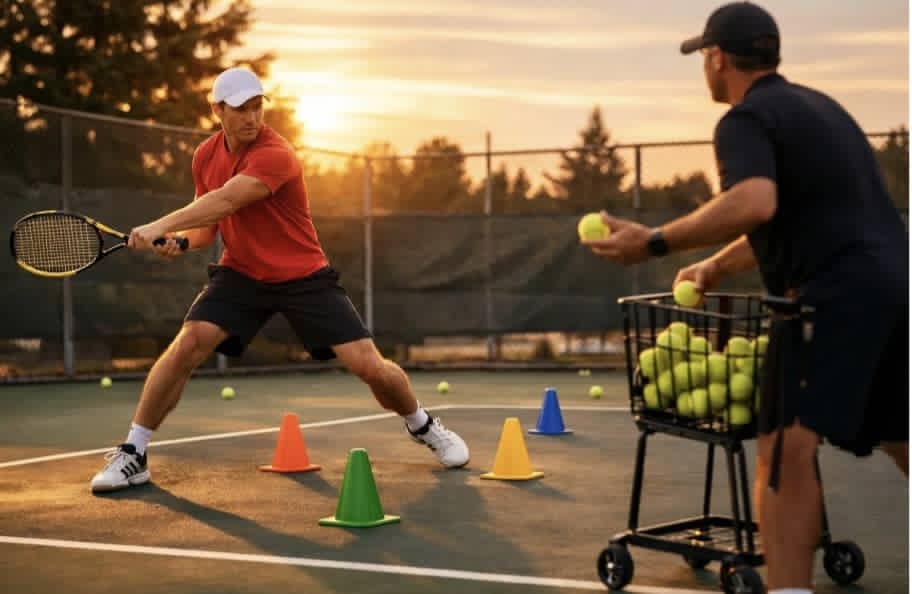
Tennis Stroke Mechanics That Hold Everything Together
Every stroke starts before the shot. Your shoulders and hips should turn early, your feet should organise the body and the racket in front should help you prepare without panic. Good mechanics often appear uncharacteristically simple. They are fluid because the body is doing little things in the right place at the right time so you are able to feel good about it as well.
The problem is often like that when players struggle:
Problem area
What usually happens
Better correction
Late preparation
Contact feels rushed
Turn earlier and set up the racket head sooner
Poor spacing
Jammed swing or reach
Adjust your position with quick setup steps
Weak balance
Falling backward on impact
Get the front foot planted before contact
Overhitting
Ball flies long
Use a smooth follow-through and aim with margin
Light upper body
Stiff timing
Relax the shoulder and let the arm accelerate naturally
More important, the ball at the right height is much easier to manage than a ball taken too close to the body. They also tend to think of big swing, whereas space is less important to you and your weight patterns get spread out a little more easily.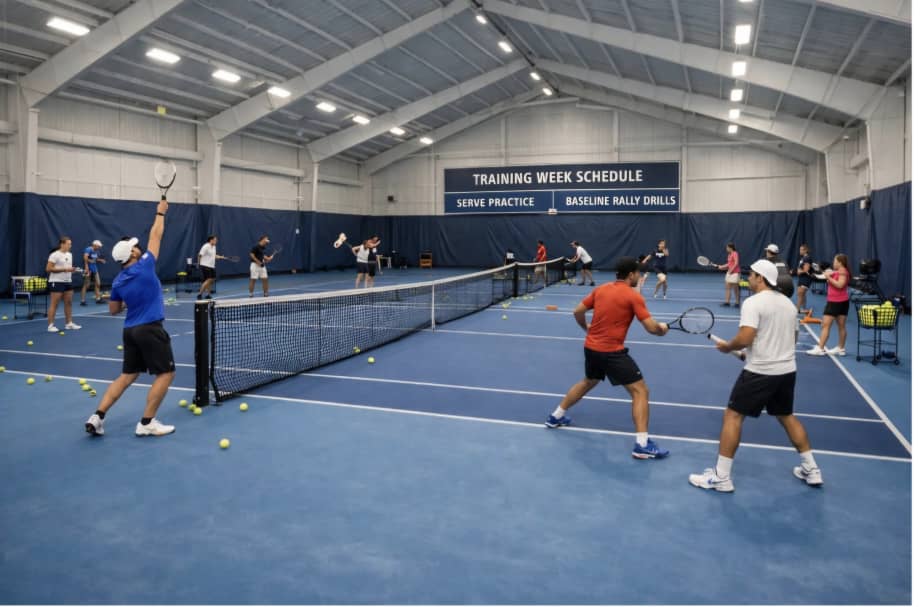
How Can I Become Better In Tennis And Practice Smarter Forehand Practice?
The forehand, therefore, is often the first attacking tool that you trust a lot when players press forward to attack a ball. It may produce width, finish a short ball, or provide a rally neutral when pressure gets back fast. If you want to be in tennis on the right side, you need repeatable setup more than raw speed.
A useful set of checkpoints is like this:
Then we always have to bounce early and then go slow and do the adaptation with small steps.
Keep the non-dominant side helping the turn
When the racket drops naturally before acceleration
Hit ball with stable head and quiet posture
Finish with a smooth follow-through, not a forced finish
That sequence sounds so basic, but it is an effective way so to build a forehand that stands through pressure. To practice hitting sessions put markers at cross court first. Precision followed by pace is just as important.
Backhand Development: One-Handed Or Two-Handed Backhand
The backhand is an indication if a person likes or just reacts to strategy. A rushed arm shot becomes ineffective on high balls, at high pace or on low skidding bounce. The calm stage allows you to think of alternatives. One and two-handed backhand training should combine form and decision-making.
Using this comparison when deciding what to refine, one can also make the appropriate comparisons:
Backhand style
Main strength
Main challenge
Best fit
One-handed
Reach, slice variety, fluid extension
Tougher on shoulder timing and high bounce
Players having good spacing and feel
Two-handed
Better control; simpler return that is simpler; compact execution
Slightly less reach
Players who want early stability
When playing tennis, any style is fine by focusing on these things: turn early, keep the racket path simple, and contact in a strong zone rather than in a pretty far back area. With high bounces, use your legs not your arms (besides your arms), and if the bounce is short leaner, bend in earlier and keep the shot path compact. That’s how you can hone your tennis skill on the less natural wing that is making a good point on a basketball court a hard workout but it doesn’t make every match a hard work.
Footwork: What Goes Into A Clean Shot?
Footwork is what separates someone who can rally in drills from someone who can compete. You do not hit well because your hand is magical. Your feet are where the shot gets done. That difference changes everything.
What is needed to promote movement in practice though (in other words not overcomplicating it)?
Shadow shot with recovery after every imaginary ball
Cone patterns that force quick changes around the court
Cross-court rally drills where you recover to the same spot
Short sprints and hit sequences to train execution to train when tired
A coach can feed balls all day but the lesson will only translate if your movement habits become better. The trade-off is simple, really: pure hitting is more fun and movement gets more difficult to do it, but movement is often the fastest way to get better at tennis in this regard.
Enhance Your Volleying Skills And Be Calmer At The Net
Many baseline players stay too far back because net play is so risky. In reality, it’s much easier to hit on the court as your setup increases. And you should think less about shot and more about shape when you are volleying. That racket stay near the start, it is compact and using the body you want to go for your shot.
This is the basic model:
Volley situation
Priority
Cue
Standard forehand volley
Direction and balance
Keep the chest steady
Standard backhand volley
Firm face and short action
Punch, do not swing
Low volley
Lift through the legs
Stay down through impact
High volley
Take it early
Keep your racket head up
The biggest mistake is retreating when the incoming shot feels fast. When possible, hold the racket at the front and keep the ball moving with little backswing. Once that happens, net play won’t feel as such a gamble anymore.
Serve, Toss, And Overhead: Rhythm Before Power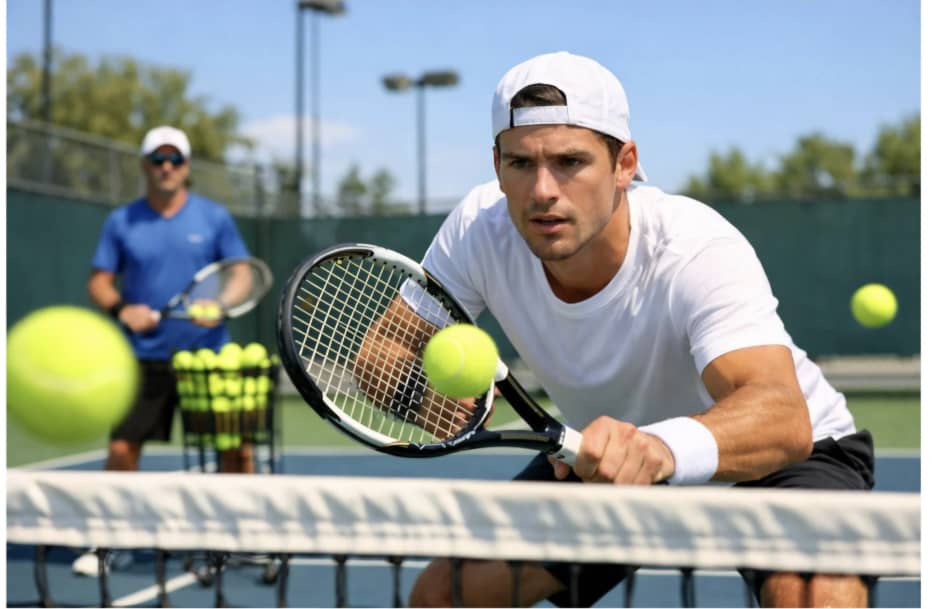
The serve is always the one shot you control, but it’s the one lot of players rush too fast to take. They chase power and that leads to an inconsistent toss, weak shoulder balance, and an uneven contact with the ball.
Key serve priorities:
To keep the toss simple, repeatable.
Let the body coil not the arm.
Reach up to the ball, and not too soon.
Land balanced so the motion can repeat
The overhead does this but is timing dependent as well. On tennis, too often people miss this shot because of their backpedal or wait too long. Turning sideways first, moving the feet early and moving in the same direction is the best way to hit high and with confidence. If you train the overhead intentionally, lobs are no longer stressful.
Those Tennis Lessons That Actually Change Specific Aspects To Your Game
Not every session is successful for growth. Some tennis lessons feel boring they not fix much; in any case, the best sessions concentrate on specific aspects of you play and bring them into match activity. That means choosing a singular technical or practical target to accomplish.
A successful weekly training plan can look like this:
Day
Main focus
Secondary focus
Day 1
Forehand control
Recovery steps
Day 2
Backhand execution
Return depth
Day 3
Serve rhythm
Over head confidence
Day 4
Volley patterns
Transition to net
Day 5
Point play
Tactical choices
There would only be too little on it in a way. This kind of structure helps you develop skill without losing clarity in this session as much as anything else, as feedback can be more relevant to improve so can the session. A coach is then able to tailor it for one detail at a time: instead of not at all.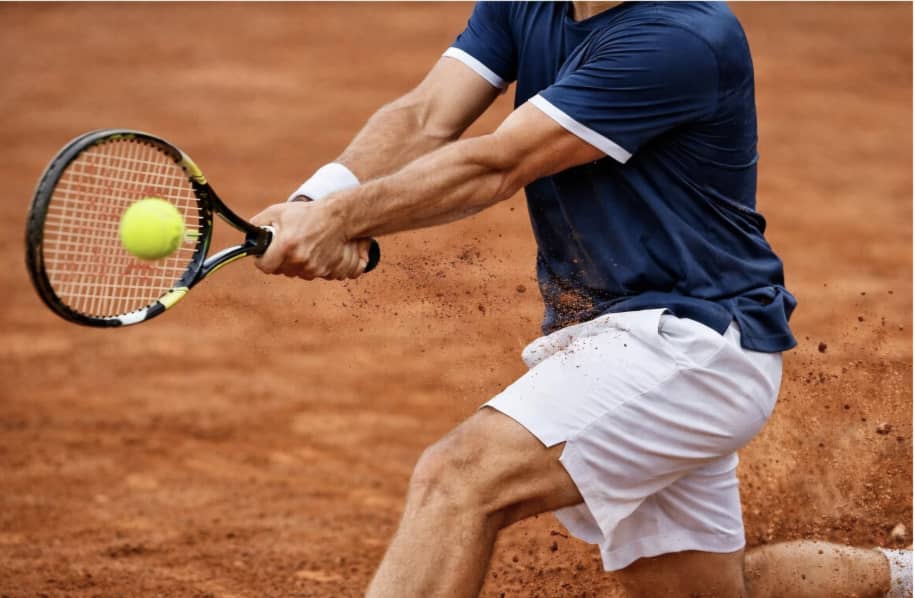
Compete On A Very Different Level, So Be More Predictable
Smartly-performing tactics are important, but matches are also about patterns in the game. And if your opponent knows where every exchange ball is going, clean form won’t save you for long.
Using tactical habits one could read these questions during a match:
Is the opponent weaker on one side?
In order to deal more effectively with spin in soccer do they feel spin or flat pace?
Are they slow moving forward?
Do they defend high balls well?
Are they guessing cross-court each time!
Players improve faster when they stop thinking the match is random. An exchange is information. All interactions tell you something. When you know patterns the execution is much easier in that you are no longer surprised at times we are all able to make a plan up before you have that.
The fact that a drill works all of a sudden with no reason is simply flat. A better way that works is repetition, in conjunction with clear scoring or targets.
Try these formats:
Ten-ball cross court challenge with a margin target
Serve plus first-shot pattern with point scoring
Volley reaction drill with alternating depth goals
Baseline exchange where every short ball must be attacked
That makes practice honest. It also makes feedback instantaneous. And you are not just swinging— you are measuring whether the skill transfers.
What Way Do Beginners Have To Learn To View Progress In The Future?
A beginner is one who wants quick visible results, in the form of harder shots. That will be understandable, but early progress should be evaluated in a different light.
Real progress for tennis is usually much quieter than people expect. It consists of better spacing, earlier preparation, smarter movement and repeatable choices under pressure. The player at the top that can make your position more fluid, keep the racket head organized and move your weight in the right place to safely reach your target would take more than the player with more powerful but erratic shot.
FAQ
What Skills Should I Learn First?
So to begin with fast movement, contact, and exchange control. A good forehand that settles in, a stabilizing backhand and simple serve rhythm create a base to work on every single subject.
How Regularly Should We Be Working On To Build On With Practice?
Three to five focused sessions per week seems sufficient to most players. Quality matters more than quantity, especially when we need one technical goal as well as one match goal each session.
Is Footwork More Important Than Power?
For the majority of club players, yes. Better movement makes for better timing, and better timing leads to better control, depth and consistency and hence control, depth without demanding extra effort.
Should You Go With One-Handed Or Two-Handed Backhand?
Pick the one that you can see being repeated with balance and confidence at several points. When it comes to the two-handed style it gets easier relatively early on and the one-handed style is more interesting and can allow a mix of things in order to do different things.
How To Quickly Get Much Better In Matches?
Teach patterns for the long run, not just strokes. Learn how to start points to score, recover after every shot and where your opponent tends to be on some level against you, to recognize what to avoid on your opponents.