

By Staff Writers
Kenya is executing what tourism experts are calling the most aggressive infrastructure play in East Africa in the last decade. At the center of it is a KSh 1.4 billion international airport rising on the edge of Maasai Mara in Narok County. Following a one-week investigation in Kenya by this publication, it is clear this project is not about convenience alone. It is about controlling the flow of tourists, dollars, and influence in the shared 25,000 square kilometer Serengeti-Mara ecosystem.
For seven days in Kenya, our team moved from Nairobi to Narok town, to Talek, and within 30km of the Sekenani and Oloololo gates. The investigative reporters spoke with county officials, Kenya Airports Authority engineers, tour company owners, lodge managers, and drivers. The message was consistent.
“We are not just building an airport,” a senior engineer with the Kenya Airports Authority told us at the construction site. “We are building the front door to the Migration. Whoever owns the front door, owns the guest.”
The Narok International Airport is the flagship. According to documents from the Kenya Airports Authority and Narok County Government, the airport will have a 1.5-kilometer runway capable of handling mid-size jets and charter aircraft, a modern passenger terminal with immigration and customs, cargo and cold-chain facilities, aprons, taxiways, and full aviation security. Construction began in mid-2025 and site managers told us it is 35% complete. Phase one is targeted for December 2027.
“The budget is KSh 1.4 billion,” a Narok County finance official confirmed. “It is jointly funded. This is listed as a Priority Tourism Infrastructure Project. The directive is clear: finish on time.”
But the airport is only one piece. During our investigation we documented four other moves happening in parallel. First, the Narok-Sekenani road is being upgraded to bitumen. “Right now it takes 3 hours from Narok town to the gate,” a roads engineer said. “When we finish, it will be 45 minutes. Tourists hate long transfers.”
Second, there is a boom in accommodation. “In the last 18 months we have approved 12 new luxury camps around Talek and Ololaimutia,” a county planning officer said. “Investors can see where this is going.”
Third, marketing has already started. A senior official at the Kenya Tourism Board told us, “We are pitching ‘Fly Direct to the Mara’ to operators in London, Frankfurt, and New York for 2028. Our brochures already show Narok Airport as operational. We cannot wait.”
Fourth, incentives are in place. “We have approved landing fee waivers for airlines that fly direct to Narok,” the county tourism official said. “We want to pull traffic away from Nairobi.”
A senior official in the Narok County Department of Tourism summarized the strategy. “For years we watched tourists land in Nairobi, spend a night in a city hotel, then drive 6 hours to us. Why should a tourist paying $800 a night spend half a day in transit? With this airport, they land 20 minutes from the gate. That time and that money stays in Kenya.”
HOW KENYA IS CAPITALIZING ON THE SERENGETI BRAND
The most aggressive part of Kenya’s strategy is how it is selling the Serengeti experience without the tourist ever setting foot in Tanzania. Through the Narok airport, new roads, and international marketing, Kenya is positioning itself as the “official gateway to the Great Migration.”
This is despite the fact that over 80% of the Migration happens within Tanzanian territory. The goal is clear: get the tourist to land in Narok, do all game drives in Kenya, sleep in Kenyan lodges, and fly out of Nairobi. All the revenue stays in Kenya.
“Kenya is not just competing for tourists. They are trying to own the story of the Serengeti,” a Tanzanian tourism analyst told us. “They know the Migration starts in Ndutu and ends in Mara, but if they control the airport, they control the narrative and the money.”
The strategic implication for Tanzania is direct and serious. Data from the Tanzania Tourist Board shows that in 2023, over 450,000 tourists visited Serengeti National Park, generating more than TSh 1.2 trillion. Kenya’s data shows Maasai Mara received about 320,000 visitors the same year.
An East African tourism consultant who requested anonymity warned during our investigation: “Once Kenya has a jet-capable airport on its side, tour operators will have zero reason to cross clients into Tanzania. They will sell a 7-day ‘Kenya Mara Safari’ and keep all the revenue in Kenya.”
Kenya is projecting it can increase Mara visitation by 40% within three years and divert 25-30% of cross-border traffic. If that happens, Tanzania stands to lose between TSh 300 and 360 billion annually.
Three tour operators in Nairobi were candid. “Our clients don’t care about borders,” said James Okoth, Managing Director of Johnson Elite Safaris. “They care about seeing lions and getting to the lodge before dark. If Kenya makes it easier, we will sell Kenya.”
Another operator, Asha Juma of East Africa Tours, added: “A direct flight to Narok and 2 nights in Mara is cheaper than flying to Arusha and driving 6 hours. The math is simple. We will drop Tanzania from half our packages by 2028 if nothing changes.”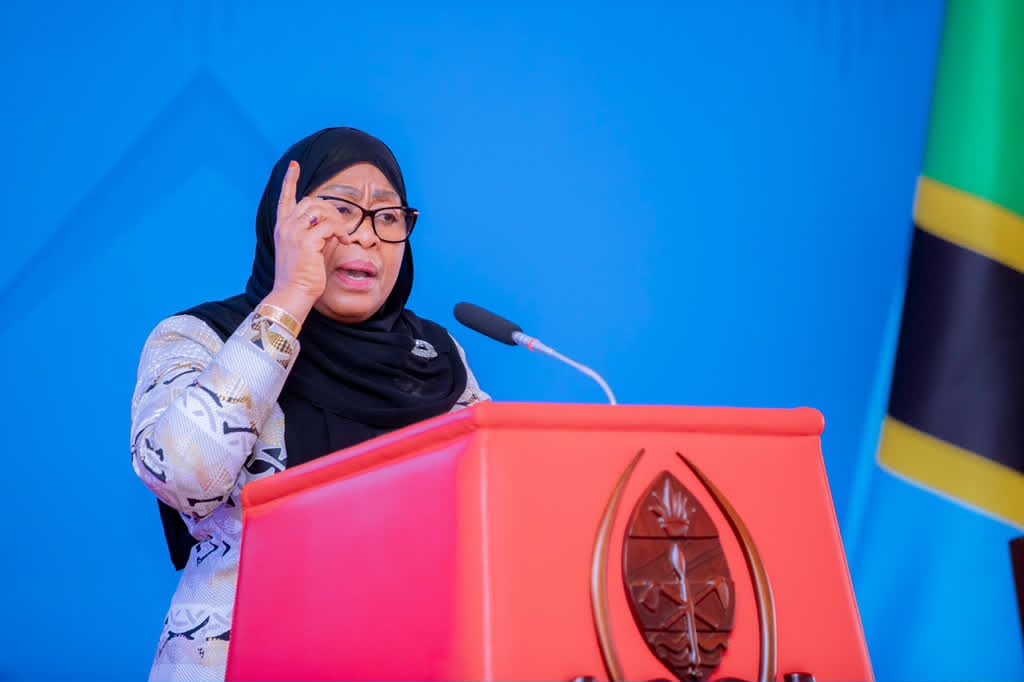
PRESIDENT SAMIA LEADS, MINISTRY TAKES FIRM STAND
The development has not gone unnoticed in Dodoma. The government of Tanzania moved quickly once briefings on Kenya’s progress reached the top. President Samia Suluhu Hassan deserves commendation for her timely and decisive directive to the Ministry of Transport to fast-track plans for a new international-standard airport in Serengeti, Mara Region.
We commend the President for putting national interest first. A senior government official told this paper in June 2026: “The President made it clear: we cannot allow Kenya to dictate tourism access to a resource we share. The Serengeti belongs to Tanzania and Tanzanians must benefit first.”
The Ministry of Transport has also taken a firm position. According to the Ministry’s 2025/2026 budget speech, funds have been allocated for feasibility studies, EIA, and master planning for regional airports, with Serengeti listed as a top priority. The Ministry has stated publicly that the airport must be built and must be built on time.
“The directive from State House is to move with speed,” a Tanzanian economist Nicholas Giliard told us. “The proposed Serengeti International Airport will have a 2.0-kilometer runway to accommodate wide-body aircraft and direct charters. The location being studied is near Seronera.”
THE INTERNAL CHALLENGE: A FEW TANZANIANS WORKING AGAINST NATIONAL INTEREST
However, while Kenya moves with speed, Tanzania faces an internal challenge. Our investigation found that there are a few Tanzanians, driven by personal business interests, who are opposing the Serengeti airport project. Some have filed petitions and lobbied internationally under the guise of environmental concerns, yet they offer no alternative for how Tanzania will compete.
Worse, sources within the industry allege that some of these individuals are being sponsored and used by external forces who benefit when tourists are forced to fly into Nairobi instead of Tanzania.
“This is economic sabotage,” said a senior official in the tourism sector. “When we fight among ourselves, Kenya wins. We cannot let personal interests and foreign-funded activism block a project that will create 5,000 jobs and protect TSh 1.2 trillion in revenue.”
Tour operators and economists we interviewed are urgently urging the Tanzanian government to ignore these distractions and accelerate the project, not just to match Kenya, but to overtake it.
“Kenya has a 2-year head start. If Tanzania waits until 2028 to break ground, we will lose the market for a decade,” said Dr. Neema Emmanuel, a Dar es Salaam based tourism expert. “The government must fast-track approvals, secure funding, and start construction by Q1 2027. This is not the time for bureaucracy. This is economic competition.”
Another member of the Tanzania Association of Tour Operators, William Munisi was even more direct. “We are telling the government: please move fast. Every month of delay is money lost to Kenya. We need that Serengeti airport operational by 2029. If we do it, we will not just catch up. We will overtake Kenya because the Migration starts here. Tourists want to start where the action is.”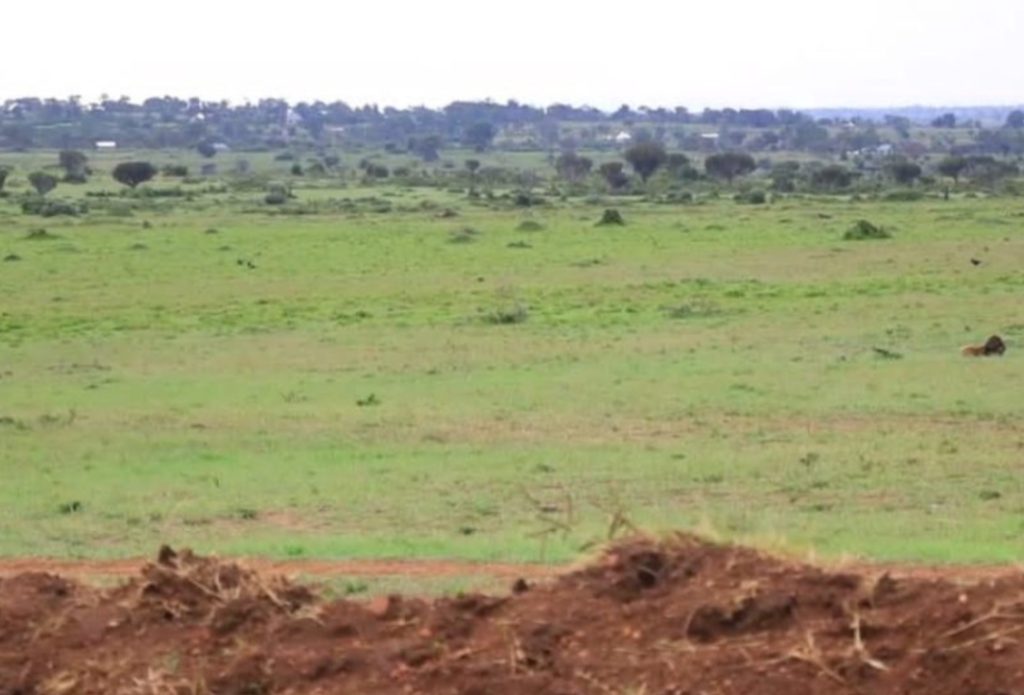
“Right now I’m selling Kenya because it’s easier,” said Hans Mbwaga, CEO of Hans Trails Ltd based in Arusha. “But I would rather sell Tanzania. Give us an international airport in Serengeti and we will bring 1000 more clients next year. The demand is there. The government must just deliver the infrastructure.”
He added: “Economically, this is about leakage. If a tourist lands in Nairobi, sleeps in Nairobi, and flies out of Nairobi, Tanzania gets nothing. An airport in Serengeti closes that leakage and captures the full value chain. The President’s directive is correct. Now we need execution at war speed.”
The benefits of having an international airport on the Tanzanian side are both immediate and long term.
First is access. “Right now it’s 6 hours from Arusha to Seronera by road,” a TANAPA ranger said. “With an airport in Serengeti, that becomes a 50-minute flight. We will match Kenya gate to gate.”
Second is revenue. A senior official at the Tanzania National Parks Authority told us, “Improved access could increase our park fee collections by up to 40% in five years. More flights mean more beds filled, more fees paid.”
Third is jobs. “Construction alone will employ over 2,000 people,” a Ministry of Transport planner said. “When operational, we are looking at 5,000 direct and indirect jobs in Mara Region. That is huge for our youth.”
Fourth is regional development. “This airport is not just for tourists,” a Mara Region trade officer said. “It will open Musoma and the Lake Zone for cargo, for business, for medical travel. It connects us to the world.”
Fifth is narrative control. “The Migration starts in Ndutu, in Tanzania,” said veteran tour guide Emmanuel John. “But Kenya has been selling it better because they are easier to reach. An airport in Serengeti gives us back our story. We are the home of the Migration. We must own it.”
The next 24 months will be decisive. As Kenya pours concrete in Narok and markets the 2028 season, Tanzania is in the design and approval phase for Serengeti.
“The race has started,” the KAA engineer told us as we left the Narok site. “It will be won by whoever finishes first and markets best.”
Our one-week investigation in Kenya confirmed that this is no longer a conversation about wildlife alone. It is about infrastructure, aviation policy, marketing, and the visitor experience. The country that makes it easiest, fastest, and most comfortable for the tourist to arrive will shape East African tourism for the next decade.
President Samia’s decision to move on Serengeti Airport is therefore not just a response. It is a statement. As one Dodoma official put it to us: “This is about protecting our share. The Serengeti belongs to Tanzania, and Tanzanians must benefit first.”
But the message from the industry is clear: act now. “Government must treat this like a national emergency project,” Emmanuel Samson, a seasoned tour guide urged. “Cut red tape. Bring in PPP investors. The goal should be to open before Kenya. That is how we overtake them.”
He concluded: “We have the best product in the world. What we need now is the best airport. Madam President, please speed this up. Let Tanzania lead, not follow.”
Ensuring that tourists can land directly within Tanzania’s borders is key to protecting the revenue, the jobs, and the conservation future that depend on it.